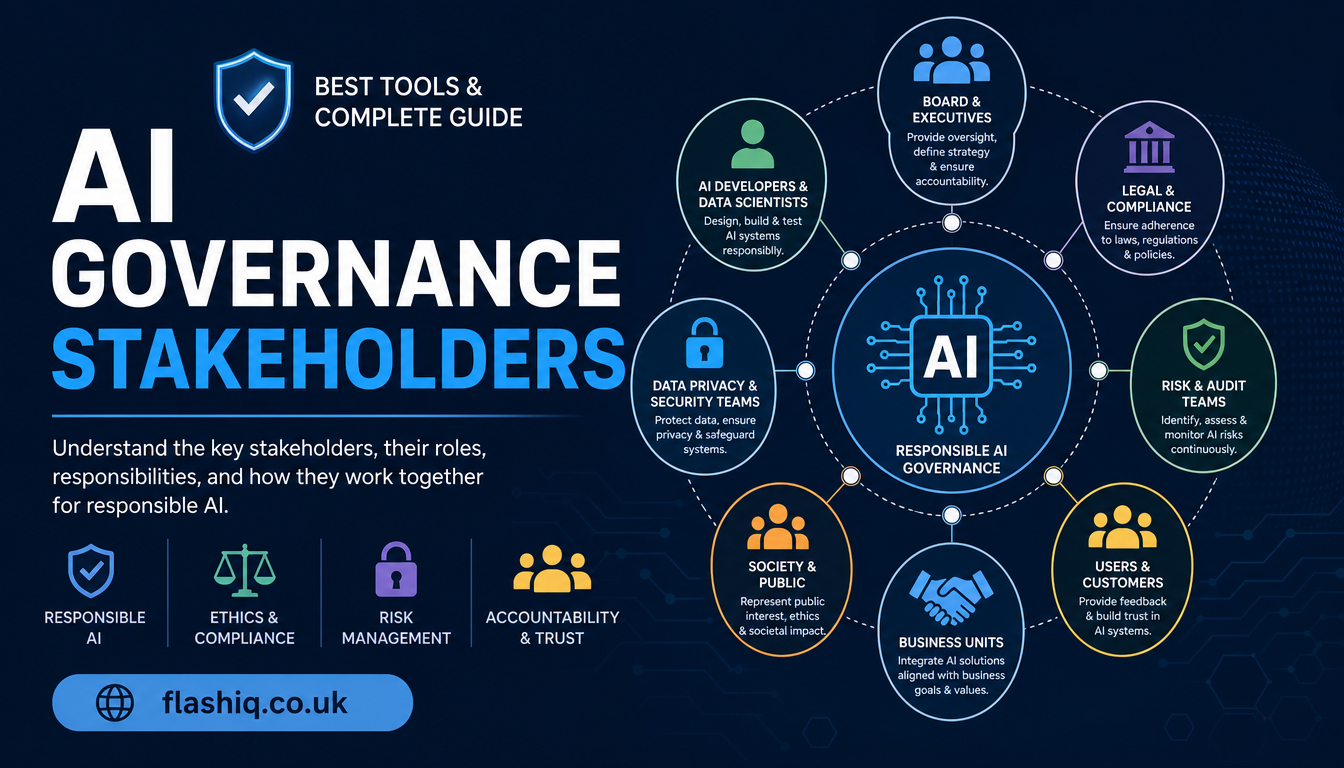
AI Governance Stakeholders Best Tools & Complete Guide
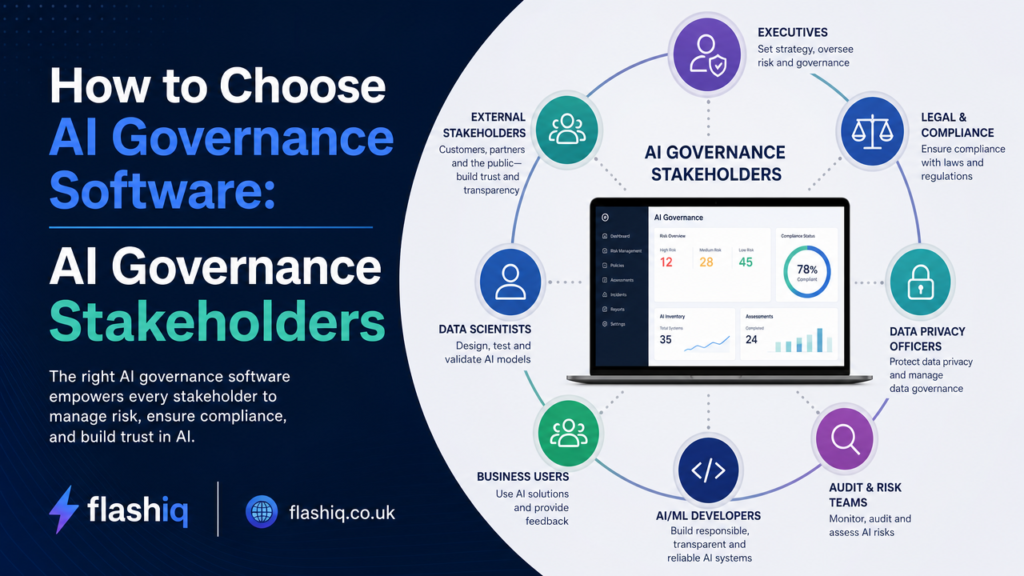
Artificial intelligence is transforming every industry, but successful AI adoption requires much more than powerful algorithms. Organizations must ensure that every decision involving AI is ethical, transparent, secure, and compliant with regulations. This is where AI governance stakeholders become essential. From executives and legal teams to developers and compliance officers, every stakeholder plays a critical role in building trustworthy AI systems.
Understanding AI governance stakeholders helps businesses reduce risks, improve accountability, and create AI solutions that align with organizational goals and regulatory requirements. As AI regulations continue to evolve worldwide, companies are investing in governance platforms that simplify oversight, automate compliance, and improve collaboration among all AI governance stakeholders.
This guide explains the importance of AI governance stakeholders, their responsibilities, and the best governance software available today.
Quick Summary
- AI governance stakeholders ensure AI systems remain ethical, transparent, secure, and compliant.
- Effective governance requires collaboration across technical, legal, business, and executive teams.
- Modern governance platforms automate documentation, monitoring, and risk management.
- Selecting the right software depends on organizational size, AI maturity, compliance requirements, and budget.
- This guide compares leading AI governance platforms to help organizations make informed decisions.
Who Are AI Governance Stakeholders?
AI governance stakeholders are the individuals, departments, and organizations responsible for overseeing the design, deployment, monitoring, and continuous improvement of AI systems.
These stakeholders work together to ensure AI solutions are:
- Ethical
- Fair
- Transparent
- Secure
- Compliant
- Reliable
- Accountable
Without effective AI governance stakeholders, organizations face higher risks of regulatory violations, bias, security issues, and reputational damage.
Why AI Governance Stakeholders Matter
Modern AI projects involve multiple departments, making collaboration essential.
Key benefits include:
- Better decision-making
- Reduced compliance risks
- Improved AI transparency
- Stronger customer trust
- Consistent governance policies
- Responsible AI development
- Continuous monitoring
Organizations that actively involve AI governance stakeholders throughout the AI lifecycle often achieve more sustainable and scalable AI implementations.
Key Responsibilities of AI Governance Stakeholders
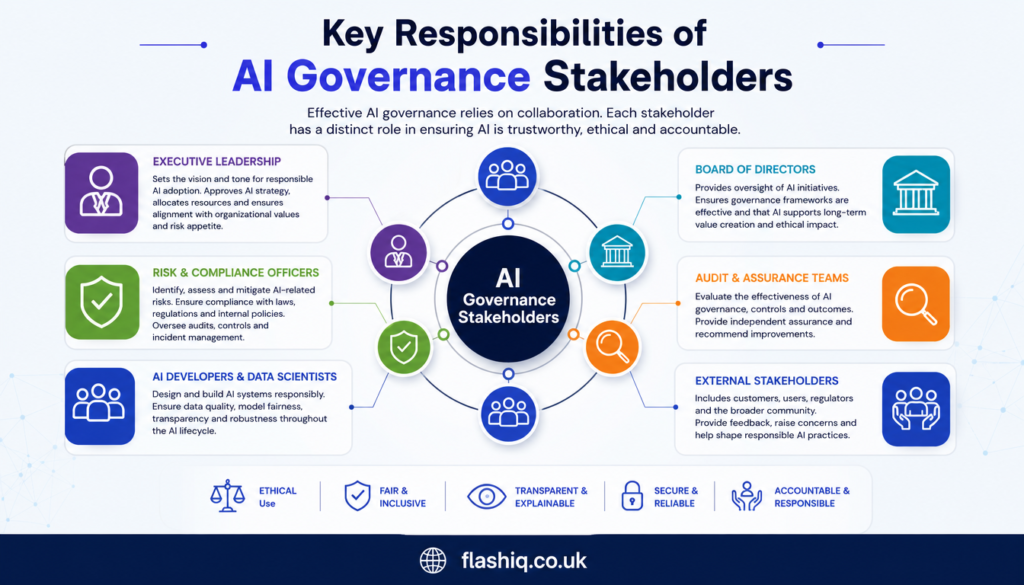
Executive Leadership
Executives establish governance strategy, approve AI investments, and ensure AI initiatives align with business objectives.
Data Scientists and AI Engineers
Technical teams build, test, monitor, and improve AI models while ensuring accuracy, fairness, and documentation.
Legal and Compliance Teams
Legal experts help organizations comply with evolving AI regulations and internal governance policies.
Security Teams
Cybersecurity professionals protect AI infrastructure, sensitive datasets, and model integrity.
Risk Management Teams
Risk officers identify operational, financial, legal, and ethical risks associated with AI systems.
Business Units
Department leaders ensure AI projects solve real business challenges while delivering measurable value.
Benefits of Strong AI Governance Stakeholder Collaboration
Organizations with engaged AI governance stakeholders often experience:
- Faster regulatory readiness
- Better documentation
- Lower operational risks
- Improved AI explainability
- Higher customer confidence
- Easier audit preparation
- Better cross-functional communication
- More consistent AI deployment
Strong collaboration enables AI governance stakeholders to respond quickly to changing regulations and emerging AI risks.
Best AI Governance Software Comparison
| Software | Best For | Key Features | Pricing | Rating |
|---|---|---|---|---|
| IBM watsonx.governance | Enterprise AI governance | Model monitoring, compliance automation, lifecycle management | Custom | ⭐⭐⭐⭐⭐ |
| Microsoft Purview | Microsoft ecosystem | AI governance, data catalog, compliance management | Custom | ⭐⭐⭐⭐⭐ |
| Credo AI | Responsible AI governance | Risk assessment, policy management, compliance workflows | Custom | ⭐⭐⭐⭐☆ |
| Holistic AI | AI risk management | Bias testing, governance dashboards, model evaluation | Custom | ⭐⭐⭐⭐☆ |
| Monitaur | AI compliance monitoring | Explainability, auditing, continuous monitoring | Custom | ⭐⭐⭐⭐☆ |
Why Businesses Need AI Governance Stakeholders
As AI adoption accelerates, organizations cannot rely solely on technical expertise. AI governance stakeholders provide oversight across governance, compliance, ethics, and security. Their collaboration helps organizations deploy AI responsibly while maintaining trust among customers, regulators, and business partners.
From policy creation to ongoing monitoring, AI governance stakeholders ensure that AI systems remain aligned with organizational values and legal requirements throughout the entire AI lifecycle.
| Software | Best For | Key Features | Pricing | Rating |
|---|---|---|---|---|
| DataRobot AI Governance | Enterprise AI lifecycle management | Model registry, governance workflows, risk monitoring, audit trails | Custom | ⭐⭐⭐⭐⭐ |
| Fiddler AI | AI observability | Model monitoring, explainability, drift detection, fairness analysis | Custom | ⭐⭐⭐⭐☆ |
| Dataiku | Collaborative AI governance | AI lifecycle management, documentation, governance controls | Custom | ⭐⭐⭐⭐☆ |
| Domino Data Lab | Regulated industries | Model governance, reproducibility, collaboration, compliance reporting | Custom | ⭐⭐⭐⭐☆ |
| Arthur AI | AI performance monitoring | Bias detection, explainability, model health monitoring, alerts | Custom | ⭐⭐⭐⭐☆ |
Feature Comparison Table
| Feature | IBM watsonx.governance | Microsoft Purview | Credo AI | Holistic AI | Monitaur | DataRobot | Fiddler AI | Dataiku | Domino Data Lab | Arthur AI |
|---|---|---|---|---|---|---|---|---|---|---|
| AI Risk Management | ✔ | ✔ | ✔ | ✔ | ✔ | ✔ | ✔ | ✔ | ✔ | ✔ |
| Compliance Monitoring | ✔ | ✔ | ✔ | ✔ | ✔ | ✔ | ✔ | ✔ | ✔ | ✔ |
| Bias Detection | ✔ | Limited | ✔ | ✔ | ✔ | ✔ | ✔ | Limited | Limited | ✔ |
| Explainability | ✔ | Limited | ✔ | ✔ | ✔ | ✔ | ✔ | ✔ | ✔ | ✔ |
| Model Monitoring | ✔ | Limited | ✔ | ✔ | ✔ | ✔ | ✔ | ✔ | ✔ | ✔ |
| Audit Trail | ✔ | ✔ | ✔ | ✔ | ✔ | ✔ | ✔ | ✔ | ✔ | ✔ |
| Workflow Automation | ✔ | ✔ | ✔ | Limited | Limited | ✔ | Limited | ✔ | ✔ | Limited |
| Enterprise Scalability | Excellent | Excellent | High | High | High | Excellent | High | Excellent | Excellent | High |
Pricing Comparison Table
| Software | Free Plan | Free Trial | Pricing Model |
|---|---|---|---|
| IBM watsonx.governance | No | Demo | Custom Enterprise Quote |
| Microsoft Purview | No | Limited | Pay-as-you-go / Enterprise |
| Credo AI | No | Demo | Custom Quote |
| Holistic AI | No | Demo | Custom Quote |
| Monitaur | No | Demo | Custom Quote |
| DataRobot AI Governance | No | Demo | Custom Enterprise Quote |
| Fiddler AI | No | Demo | Custom Quote |
| Dataiku | Community Edition Available | Yes | Custom Enterprise |
| Domino Data Lab | No | Demo | Enterprise Quote |
| Arthur AI | No | Demo | Custom Pricing |
How to Choose AI Governance Software
Selecting the right platform depends on your organization’s AI maturity, regulatory requirements, and governance goals. Keep these factors in mind:
- Compliance Needs: Choose software that supports regulations relevant to your industry and geography.
- Scalability: Ensure the platform can handle increasing numbers of AI models and users.
- Integration: Look for compatibility with your existing cloud, data, and machine learning infrastructure.
- Explainability: Prioritize tools that provide transparent model explanations and decision tracking.
- Risk Management: Select software with built-in bias detection, monitoring, and governance workflows.
- Ease of Use: Dashboards and reporting should be accessible to both technical and non-technical AI governance stakeholders.
- Audit Support: Strong documentation and audit trails simplify compliance reviews.
- Vendor Support: Evaluate onboarding, training, and customer support before making a decision.
Our Recommendation
For large enterprises with complex AI ecosystems, IBM watsonx.governance offers one of the most comprehensive governance platforms, combining lifecycle management, compliance automation, and model monitoring.
Organizations deeply invested in Microsoft technologies may find Microsoft Purview to be the most seamless choice for governance and data compliance.
If responsible AI and regulatory readiness are the primary focus, Credo AI, Holistic AI, and Monitaur provide strong governance capabilities for ethical AI deployment.
Ultimately, the best solution is one that enables AI governance stakeholders to collaborate effectively while maintaining transparency, accountability, and continuous oversight across the AI lifecycle.
Conclusion
As AI adoption accelerates, organizations can no longer treat governance as an afterthought. Effective AI governance stakeholders ensure that AI systems remain ethical, transparent, secure, and compliant from development through deployment and ongoing monitoring.
By clearly defining stakeholder responsibilities and adopting a robust governance platform, businesses can reduce operational risks, improve regulatory compliance, and build greater trust with customers and regulators. Whether you’re a startup deploying your first AI application or a global enterprise managing hundreds of models, investing in governance today creates a stronger foundation for long-term AI success.
Frequently Asked Questions (FAQs)
1. Who are AI governance stakeholders?
AI governance stakeholders include executives, AI engineers, compliance teams, legal professionals, security experts, risk managers, and business leaders responsible for overseeing AI systems.
2. Why are AI governance stakeholders important?
They help ensure AI systems are ethical, transparent, secure, compliant, and aligned with business objectives.
3. What is AI governance?
AI governance is the framework of policies, processes, and controls used to manage AI systems responsibly throughout their lifecycle.
4. Which industries benefit most from AI governance?
Healthcare, finance, insurance, government, manufacturing, retail, telecommunications, and education all benefit from strong AI governance.
5. What features should AI governance software include?
Key features include model monitoring, explainability, bias detection, compliance management, audit trails, workflow automation, and risk assessment.
6. Is AI governance required by law?
Requirements vary by region and industry, but many jurisdictions are introducing regulations that require responsible AI practices and accountability.
7. Can small businesses implement AI governance?
Yes. Small organizations can adopt governance practices by defining stakeholder roles, documenting AI usage, and using scalable governance tools.
8. How often should AI governance policies be reviewed?
Policies should be reviewed regularly, especially after significant AI updates, regulatory changes, or emerging risk assessments.
Quick Bio
About the Author
The author specializes in artificial intelligence, enterprise software, digital transformation, and emerging technology trends. With a focus on creating practical, research-driven content, they help organizations understand complex topics such as AI governance, compliance, automation, and responsible AI adoption through clear, actionable guidance.