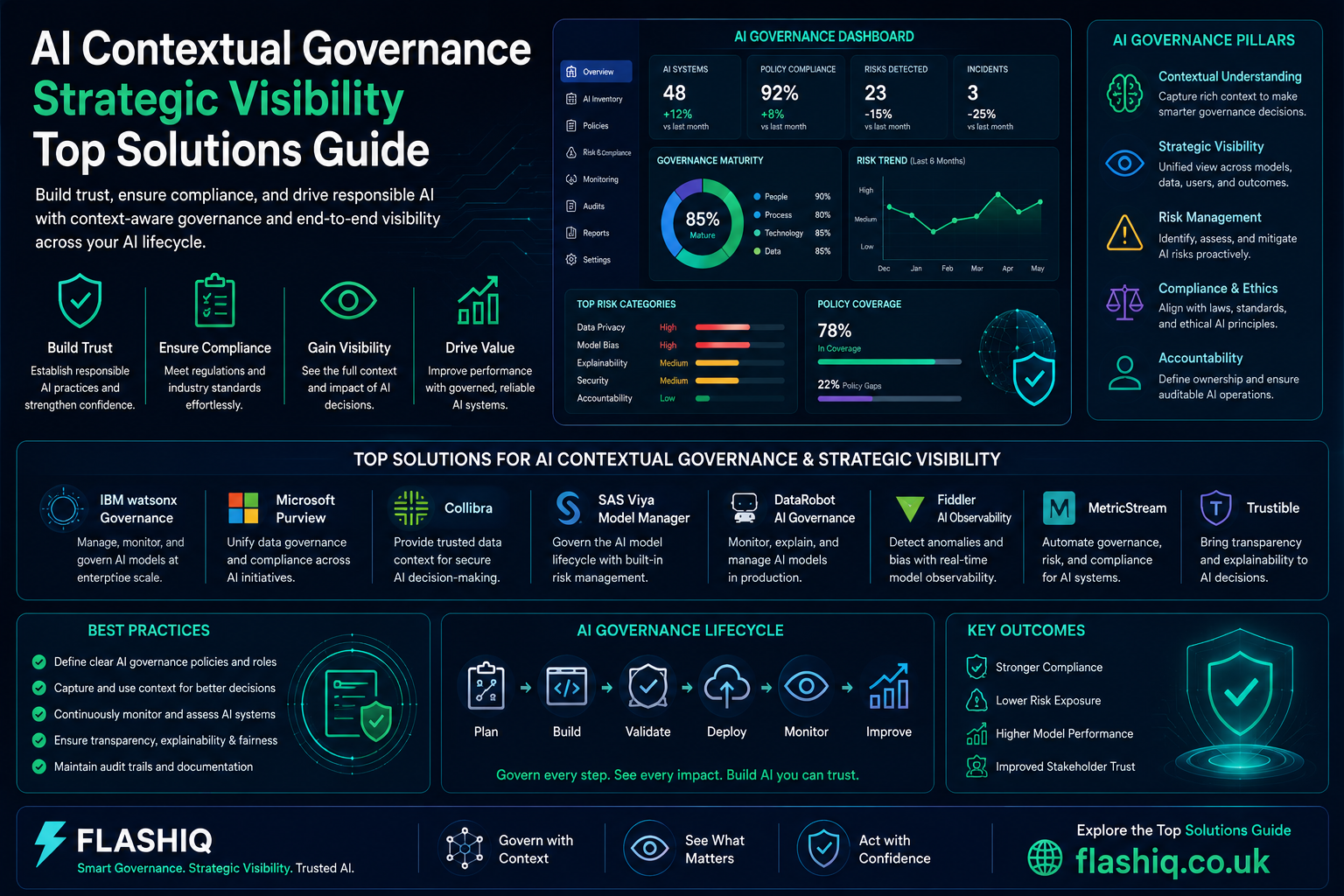
AI Contextual Governance Strategic Visibility Top Solutions Guide
Artificial intelligence is transforming every industry, but managing AI responsibly has become just as important as building it. Organizations now need complete ai contextual governance strategic visibility to understand how AI models operate, where risks exist, and whether decisions comply with regulations. Without a structured governance strategy, businesses may struggle with compliance, transparency, and trust.
Modern governance platforms provide organizations with ai contextual governance strategic visibility across the entire AI lifecycle. From monitoring data quality to tracking model performance and documenting decisions, these tools help reduce operational risks while improving accountability.
As AI regulations continue to evolve worldwide, businesses are investing in software that delivers ai contextual governance strategic visibility in real time. The right platform enables leaders to make informed decisions, simplify audits, and maintain confidence in AI-driven processes.
Whether you manage enterprise AI, machine learning pipelines, or generative AI applications, selecting the right governance platform is essential. This guide explores the leading solutions that strengthen ai contextual governance strategic visibility while improving compliance, collaboration, and operational efficiency.
Quick Summary
Businesses adopting AI require reliable governance frameworks to reduce risks and ensure transparency. Modern governance platforms deliver ai contextual governance strategic visibility by tracking models, monitoring compliance, documenting decisions, and providing clear reporting.
What Is AI Contextual Governance Strategic Visibility?
AI contextual governance strategic visibility refers to the ability to understand, monitor, and govern artificial intelligence systems within their operational, regulatory, and business contexts.
Rather than focusing only on technical metrics, ai contextual governance strategic visibility connects AI performance with business goals, compliance requirements, security controls, and ethical standards. Organizations gain complete oversight of model development, deployment, monitoring, and retirement.
Why Organizations Need It
Organizations benefit from ai contextual governance strategic visibility because it enables:
- Better regulatory compliance
- Improved AI transparency
- Risk identification
- Continuous monitoring
- Stronger executive reporting
- Faster audit preparation
- Responsible AI deployment
Key Features to Look For
When evaluating governance platforms, prioritize solutions offering:
End-to-End Model Governance
Track AI systems from development through production while maintaining ai contextual governance strategic visibility.
Automated Compliance
Generate compliance reports and maintain documentation automatically.
Risk Monitoring
Detect model drift, bias, security issues, and policy violations before they become business problems.
Explainability
Provide understandable AI decisions for technical teams, executives, and regulators.
Centralized Dashboard
Deliver ai contextual governance strategic visibility through unified reporting and executive dashboards.
Top AI Governance Platforms
Comparison Table
| Software | Best For | Key Governance Features | Strategic Visibility | Starting Price |
|---|---|---|---|---|
| IBM watsonx.governance | Large enterprises | AI lifecycle governance, model monitoring, compliance automation | Excellent ai contextual governance strategic visibility with enterprise reporting | Custom |
| Microsoft Purview | Microsoft ecosystem | AI governance, compliance management, data governance | Strong contextual insights across Microsoft environments | Custom |
| DataRobot AI Governance | Machine learning teams | Model documentation, approvals, monitoring, audit trails | High visibility into model performance and risk | Custom |
| Collibra | Enterprise data governance | Metadata management, governance workflows, AI policy management | Strong business context integration | Custom |
| Credo AI | Responsible AI governance | AI risk management, policy enforcement, regulatory mapping | Excellent visibility for responsible AI programs | Custom |
Benefits of AI Contextual Governance Strategic Visibility
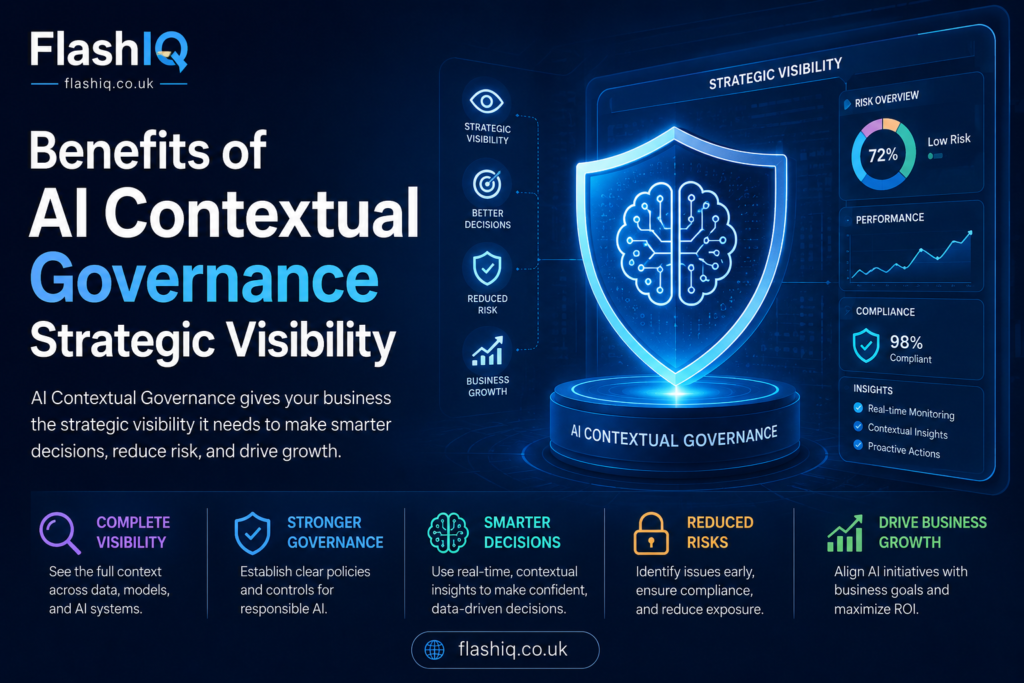
Organizations implementing ai contextual governance strategic visibility experience several long-term advantages.
Better Regulatory Readiness
Governance platforms simplify compliance with evolving AI regulations while maintaining complete documentation.
Improved Executive Decision-Making
Executives gain clear insights into AI investments, performance, and operational risks through centralized reporting.
Enhanced Customer Trust
Transparent governance increases confidence among customers, partners, and regulators.
Lower Operational Risk
Continuous monitoring helps detect issues before they impact production systems.
Scalable AI Operations
As AI adoption grows, ai contextual governance strategic visibility ensures governance processes remain consistent across departments.
| Software | Best For | Key Governance Features | Strategic Visibility | Starting Price |
|---|---|---|---|---|
| Amazon SageMaker Model Governance | AWS users | Model registry, approval workflows, monitoring, lineage tracking | Strong visibility across AWS AI environments | Custom |
| Google Vertex AI | Google Cloud users | Model monitoring, explainability, governance tools, ML pipelines | High contextual visibility for cloud-native AI | Custom |
| Fiddler AI | AI observability | Model monitoring, explainability, drift detection, fairness analysis | Excellent operational visibility into production AI | Custom |
| Arthur AI | Enterprise AI monitoring | Bias detection, performance monitoring, explainability, compliance reporting | Comprehensive AI health and governance visibility | Custom |
| Holistic AI | Responsible AI initiatives | AI audits, regulatory assessments, governance frameworks, risk analysis | Strong strategic visibility for AI compliance and ethics | Custom |
Feature Comparison Table
| Feature | IBM watsonx.governance | Microsoft Purview | DataRobot | Collibra | Credo AI | SageMaker | Vertex AI | Fiddler AI | Arthur AI | Holistic AI |
|---|---|---|---|---|---|---|---|---|---|---|
| AI Lifecycle Governance | ✓ | ✓ | ✓ | ✓ | ✓ | ✓ | ✓ | Limited | Limited | ✓ |
| Compliance Management | ✓ | ✓ | ✓ | ✓ | ✓ | Limited | Limited | Limited | Limited | ✓ |
| Risk Assessment | ✓ | ✓ | ✓ | ✓ | ✓ | ✓ | ✓ | ✓ | ✓ | ✓ |
| Model Monitoring | ✓ | Limited | ✓ | Limited | ✓ | ✓ | ✓ | ✓ | ✓ | Limited |
| Explainability | ✓ | Limited | ✓ | Limited | ✓ | ✓ | ✓ | ✓ | ✓ | ✓ |
| Bias Detection | ✓ | Limited | ✓ | Limited | ✓ | Limited | ✓ | ✓ | ✓ | ✓ |
| Audit Trail | ✓ | ✓ | ✓ | ✓ | ✓ | ✓ | ✓ | Limited | Limited | ✓ |
| Dashboard & Reporting | ✓ | ✓ | ✓ | ✓ | ✓ | ✓ | ✓ | ✓ | ✓ | ✓ |
| Enterprise Scalability | Excellent | Excellent | Excellent | Excellent | Excellent | Excellent | Excellent | High | High | High |
Pricing Comparison Table
| Software | Free Trial | Pricing Model | Best For |
|---|---|---|---|
| IBM watsonx.governance | No | Custom Enterprise Quote | Large Enterprises |
| Microsoft Purview | No | Azure Consumption + Enterprise | Microsoft Organizations |
| DataRobot AI Governance | Demo | Custom | Data Science Teams |
| Collibra | Demo | Enterprise Quote | Data Governance Programs |
| Credo AI | Demo | Enterprise Quote | Responsible AI Governance |
| Amazon SageMaker Model Governance | Pay-as-you-go | AWS Usage-Based | AWS Customers |
| Google Vertex AI | Pay-as-you-go | Google Cloud Usage | Google Cloud Users |
| Fiddler AI | Demo | Custom | AI Monitoring |
| Arthur AI | Demo | Enterprise Quote | AI Operations |
| Holistic AI | Demo | Enterprise Quote | AI Compliance Programs |
How to Choose
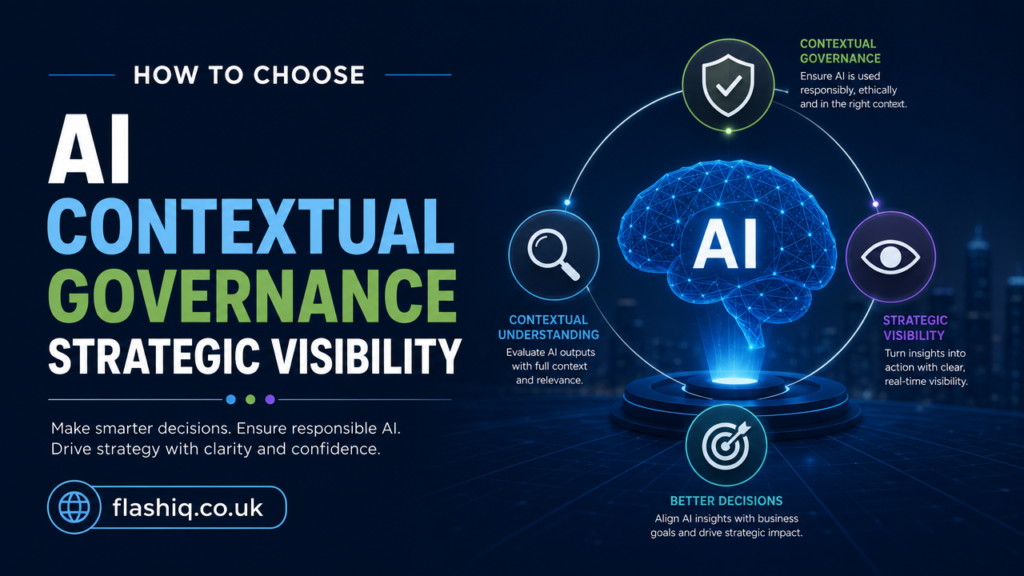
Selecting the right AI governance platform depends on your organization’s size, existing technology stack, compliance requirements, and AI maturity.
Consider the following factors before making a decision:
- Cloud Compatibility: Choose a platform that integrates with your existing cloud infrastructure, such as AWS, Azure, or Google Cloud.
- Compliance Requirements: If your organization operates in regulated industries, prioritize solutions with strong audit trails and policy management.
- Model Monitoring: Ensure the software continuously tracks performance, bias, drift, and explainability.
- Scalability: Enterprise organizations should select platforms capable of managing hundreds or thousands of AI models.
- Ease of Integration: Native integrations with data platforms, ML tools, and business intelligence systems can significantly reduce implementation time.
- Reporting Capabilities: Executive dashboards and automated reporting simplify governance and improve strategic decision-making.
- Support and Documentation: Enterprise-grade support and extensive documentation are essential for long-term success.
Our Recommendation
For most large enterprises, IBM watsonx.governance stands out as the most comprehensive option because it combines AI lifecycle management, compliance automation, model monitoring, and executive reporting in a single platform.
Organizations heavily invested in Microsoft technologies should consider Microsoft Purview, while AWS users may benefit from Amazon SageMaker Model Governance. Companies prioritizing responsible AI and regulatory readiness should evaluate Credo AI or Holistic AI.
Ultimately, the best platform is the one that aligns with your existing infrastructure, governance objectives, and future AI strategy.
Conclusion
As artificial intelligence becomes increasingly integrated into business operations, governance is no longer optional. Organizations need reliable tools that provide visibility into every stage of the AI lifecycle while supporting transparency, accountability, and regulatory compliance.
The platforms compared in this guide offer different strengths, from enterprise-wide governance frameworks to specialized model monitoring and responsible AI capabilities. Evaluating features, pricing, integrations, and scalability will help you select the solution that best supports your long-term AI initiatives.
Investing in a strong governance platform today can reduce future compliance risks, improve stakeholder trust, and create a more resilient foundation for AI-driven innovation.
Frequently Asked Questions (FAQs)
1. What is AI contextual governance strategic visibility?
It refers to the ability to monitor, govern, and understand AI systems within business, operational, and regulatory contexts.
2. Why is AI governance important?
AI governance helps organizations reduce risks, ensure regulatory compliance, improve transparency, and build trust in AI-driven decisions.
3. Which industries benefit the most from AI governance?
Healthcare, finance, insurance, manufacturing, retail, government, telecommunications, and technology organizations all benefit significantly.
4. What features should I prioritize in an AI governance platform?
Look for model monitoring, explainability, compliance management, audit trails, bias detection, risk assessment, and centralized reporting.
5. Is AI governance only for large enterprises?
No. Small and medium-sized businesses can also benefit from governance tools, especially as AI adoption grows and regulations evolve.
6. Can AI governance platforms detect model bias?
Yes. Many leading platforms include fairness testing, bias detection, and explainability features to support responsible AI.
7. Which platform is best for cloud-native environments?
Amazon SageMaker Model Governance is well-suited for AWS users, while Google Vertex AI is ideal for organizations using Google Cloud.
8. How often should AI models be monitored?
Continuous monitoring is recommended to detect model drift, performance degradation, security issues, and compliance risks as early as possible.
Quick Bio
About the Author
This guide was prepared by an AI and enterprise technology researcher specializing in artificial intelligence governance, cloud platforms, compliance frameworks, and digital transformation. The goal is to provide practical, up-to-date insights that help organizations evaluate governance solutions, strengthen responsible AI practices, and make informed technology decisions.