Do Messages Deliver When Phone Is Dead? The Complete Guide to Message Delivery
Do Messages Deliver When Phone Is Dead?
Many people have experienced sending an important text and wondering whether the recipient actually received it if their phone suddenly died. Whether you’re waiting for a reply from a friend, family member, coworker, or client, understanding how messaging systems work can eliminate unnecessary confusion. The question do messages deliver when phone is dead is more common than ever because people rely on smartphones for nearly every form of communication. Different messaging services use different technologies, so the answer depends on whether you’re sending an SMS, iMessage, WhatsApp message, or another chat. Your mobile carrier, internet connection, and the recipient’s device also play significant roles. While many people assume messages disappear if a phone is off, that’s rarely the case. In most situations, messages are temporarily stored until the device reconnects to the network. This guide explains exactly what happens behind the scenes.
Quick Answer
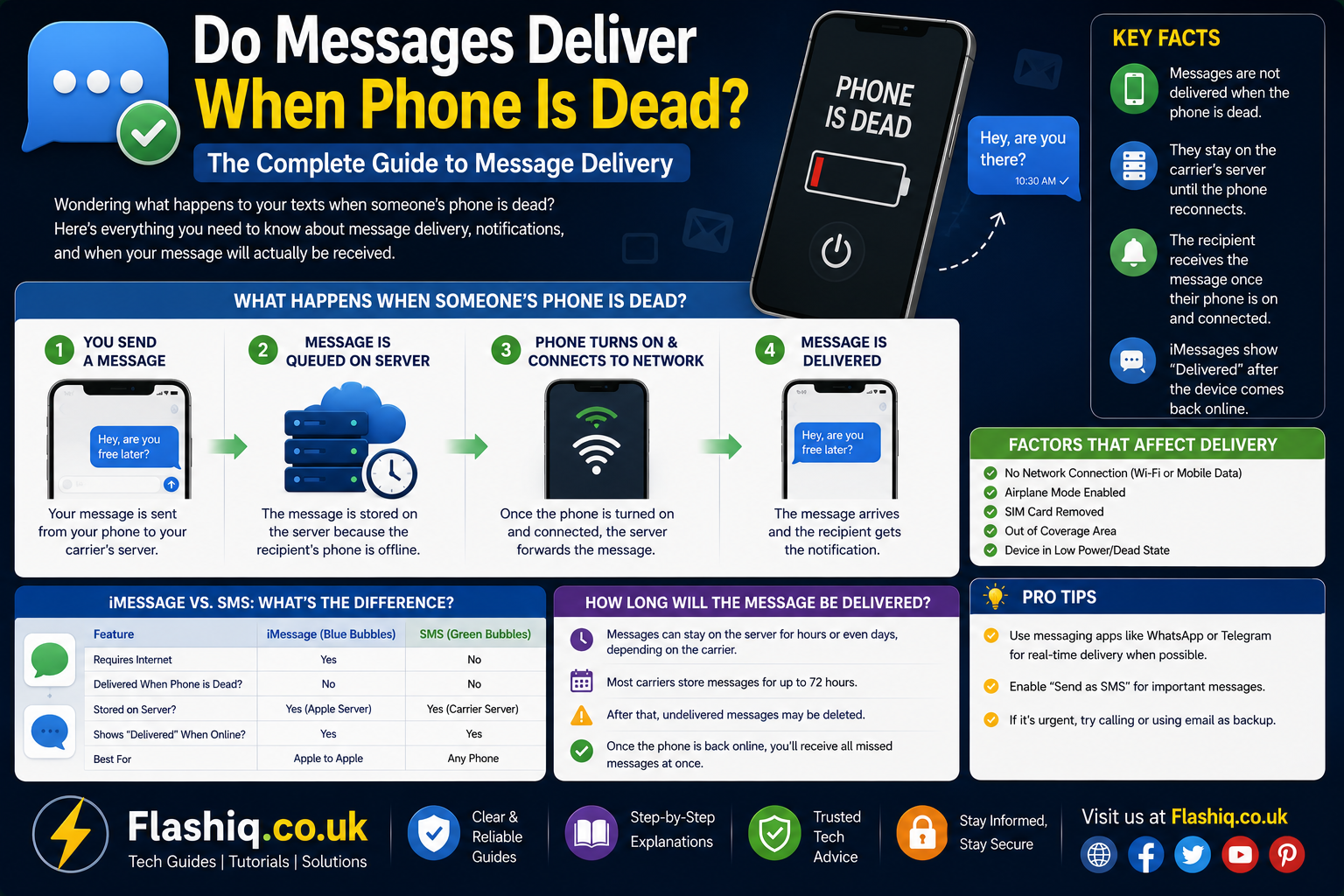
No, messages usually do not deliver immediately when the recipient’s phone is dead. Instead, they remain queued on the carrier’s server or messaging platform until the phone is powered back on and reconnects to the cellular network or the internet. Once the device becomes available again, the message is delivered automatically if it is still within the provider’s storage period. The exact behavior depends on the messaging service being used. Standard SMS messages, iMessages, WhatsApp, Facebook Messenger, Signal, Telegram, and other apps all handle offline delivery differently. In most cases, your message is not lost simply because someone’s phone battery has died. Instead, it waits for the device to become reachable again. Understanding these differences helps answer the common question: do messages deliver when phone is dead.
Understanding How Message Delivery Works
Before answering do messages deliver when phone is dead, it’s important to understand how modern messaging systems function. Whenever you send a message, it doesn’t travel directly from your phone to another device. Instead, it passes through servers operated by your cellular carrier or the messaging platform. These servers temporarily store messages until they can successfully reach the intended recipient. If the recipient’s phone is unavailable because it has no battery, is switched off, or has no network connection, the server continues trying to deliver the message periodically. Once the device reconnects, the server forwards the waiting message automatically. This process is called store-and-forward messaging, and it has been the foundation of SMS technology for decades. Internet messaging apps use similar cloud-based systems, although their storage rules and delivery confirmations vary. Understanding this background makes it easier to explain why do messages deliver when phone is dead has different answers depending on the service.
What Happens When a Phone Battery Dies?
When a smartphone battery reaches zero percent, the device immediately shuts down and disconnects from every network. It is no longer connected to the mobile carrier, Wi-Fi, or mobile data. Since the phone is offline, it cannot receive incoming messages in real time. However, that doesn’t mean the messages disappear forever. Most carriers temporarily hold SMS messages on their servers until the phone reconnects. Likewise, cloud messaging platforms such as WhatsApp or iMessage store encrypted messages until the device comes online again. Once the phone is charged and powered on, the stored messages synchronize automatically. This is why people often receive several messages simultaneously after turning their phones back on. Therefore, the answer to do messages deliver when phone is dead is generally that they wait rather than fail.
How SMS Messages Behave When the Phone Is Dead
SMS, or Short Message Service, remains one of the most reliable communication methods because it works independently of internet connectivity. When you send an SMS to someone whose phone battery is dead, your mobile carrier attempts to deliver it immediately. If delivery fails because the phone is offline, the carrier stores the message for a specific period. This storage window varies between carriers but usually lasts anywhere from several hours to several days. During this time, the carrier repeatedly checks whether the recipient’s device has reconnected to the network. Once it detects the phone is available again, the stored SMS is delivered automatically. In most situations, the sender never needs to resend the message. This server-based system explains why do messages deliver when phone is dead often results in a delayed delivery rather than a failed one.
Typical SMS Delivery Timeline
| Phone Status | SMS Result |
|---|---|
| Phone turned on | Delivered immediately |
| Phone battery dead | Stored by carrier |
| Phone powered off | Stored by carrier |
| Airplane mode | Delivered after reconnecting |
| No cellular signal | Delivered once signal returns |
Do iMessages Deliver When an iPhone Is Dead?
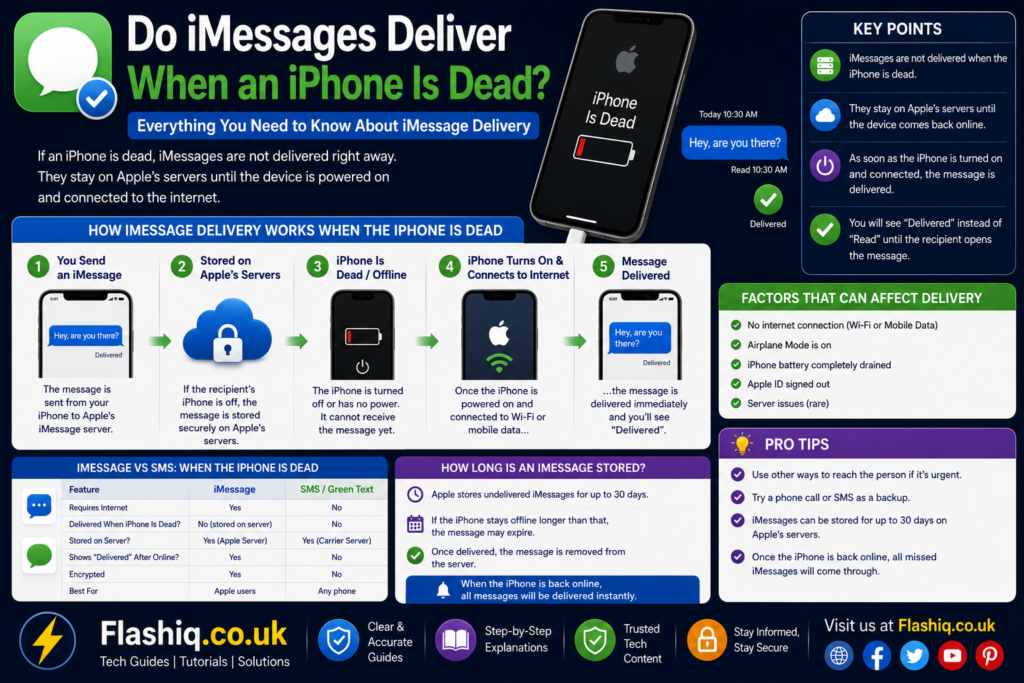
Apple’s iMessage system works differently from traditional SMS because it relies entirely on an internet connection. If the recipient’s iPhone battery dies, Apple’s servers cannot deliver the encrypted message immediately. Instead, the message remains securely stored in Apple’s messaging infrastructure until the device reconnects to Wi-Fi or cellular data. Once the iPhone powers back on and authenticates with Apple’s servers, pending iMessages download automatically. If the device remains offline for an extended period, Apple may eventually stop retrying, although this rarely affects normal situations. In some cases, if iMessage cannot be delivered after repeated attempts and SMS fallback is enabled, the sender may have the option to resend the message as a standard text. Therefore, when asking do messages deliver when phone is dead, iMessage typically delays delivery until the phone is active again.
How iMessage Delivery Differs
iMessage Requires Internet
Unlike SMS, iMessage depends on Apple’s servers and an active internet connection. Without either Wi-Fi or cellular data, messages remain pending.
Read Receipts Are Delayed
Read receipts only appear after the phone powers back on, receives the message, and the user actually opens it.
Delivery Status May Remain Pending
You may see “Delivered” appear several minutes or even hours later depending on when the recipient charges their phone.
What About WhatsApp Messages?
WhatsApp uses end-to-end encryption and cloud-managed delivery rather than traditional SMS networks. If someone’s phone battery dies, WhatsApp’s servers temporarily store encrypted messages for delivery later. Since the recipient’s device is offline, the message shows only one gray check mark, indicating it has successfully reached WhatsApp’s servers but not the recipient’s phone. Once the phone reconnects to the internet after being charged, WhatsApp automatically delivers the waiting messages. At that point, the second gray check mark appears to confirm delivery. If the recipient opens the chat and read receipts are enabled, the blue check marks appear. This delivery process demonstrates why do messages deliver when phone is dead depends heavily on the messaging platform rather than the phone itself.
WhatsApp Check Mark Meanings
| Check Mark | Meaning |
|---|---|
| One gray check | Message reached WhatsApp server |
| Two gray checks | Delivered to recipient’s phone |
| Two blue checks | Recipient has read the message |
Factors That Affect Message Delivery
Several technical factors determine exactly how quickly messages arrive after a phone powers back on. The messaging service is the most important variable because SMS, iMessage, WhatsApp, Signal, Telegram, and Messenger all use different server infrastructures. Carrier policies also influence how long SMS messages remain stored before being discarded. Internet connectivity affects cloud-based messaging platforms because the phone must establish a stable connection before synchronization begins. Device settings, software updates, and account issues may occasionally introduce additional delays. In rare cases, storage limits or synchronization errors can postpone delivery even after the phone reconnects. Understanding these variables provides a more accurate answer to do messages deliver when phone is dead instead of assuming every messaging service behaves identically.
Common Delivery Factors
Mobile Carrier Policies
Different carriers keep undelivered SMS messages for different lengths of time before deleting them.
Internet Availability
Messaging apps require a working internet connection before pending messages can download.
Device Synchronization
Some phones need several moments after startup before all messaging services reconnect successfully.
App-Specific Servers
Cloud messaging applications rely on their own servers rather than cellular carriers, resulting in different delivery behaviors.
Does Phone Type Affect Message Delivery?
The answer to do messages deliver when phone is dead can also depend on the type of phone and operating system being used. Android devices and iPhones rely on different messaging technologies, especially when users send messages through their default messaging apps. Standard SMS messages behave almost identically regardless of the phone model because they travel through the mobile carrier’s network. However, rich messaging services like iMessage and Rich Communication Services (RCS) introduce additional variables that can affect delivery timing. Device software, operating system updates, and synchronization settings may also influence how quickly pending messages appear after the phone powers back on. Modern smartphones are designed to reconnect automatically to cellular networks and cloud messaging servers immediately after startup, minimizing delays. In most cases, users will receive all queued messages within seconds or minutes of reconnecting. This is another reason why the answer to do messages deliver when phone is dead is usually yes—they simply arrive later rather than instantly.
Android vs. iPhone Message Delivery
| Feature | Android (SMS/RCS) | iPhone (SMS/iMessage) |
|---|---|---|
| SMS Support | Yes | Yes |
| Internet Required for Rich Messaging | RCS only | iMessage only |
| Offline Message Storage | Carrier or Google | Carrier or Apple |
| Automatic Delivery After Restart | Yes | Yes |
| Read Receipts | Depends on app | Supported in iMessage |
Do Messages Deliver If the Phone Is Off Instead of Dead?
Many people confuse a dead phone with a powered-off phone, but the result is generally the same. Whether someone intentionally turns off their device or the battery drains completely, the phone disconnects from all communication networks. As a result, incoming SMS messages cannot be delivered immediately. Instead, they remain on the carrier’s servers until the device reconnects. Messaging apps such as WhatsApp, Telegram, Signal, and Facebook Messenger also retain encrypted messages until the user returns online. The difference lies only in why the phone is offline, not in how the messaging system handles pending messages. Once the phone starts again and reconnects to cellular data or Wi-Fi, the queued messages synchronize automatically. Therefore, if you’re wondering do messages deliver when phone is dead, the same explanation generally applies when the phone is simply switched off.
How Long Will Messages Wait Before Delivery?
One of the most common follow-up questions after asking do messages deliver when phone is dead is how long the messages remain available. The answer varies depending on the messaging platform and the mobile carrier. Most cellular providers temporarily store undelivered SMS messages for anywhere from 24 hours to several days before removing them. Internet-based messaging services often retain encrypted messages even longer, although exact retention periods differ by provider. If the recipient turns the phone back on within that storage period, the waiting messages are delivered automatically without requiring the sender to take any action. If the offline period extends beyond the service’s retention limit, some messages may expire and never reach the recipient. Fortunately, for most everyday situations involving a dead battery, phones are usually recharged well before any storage limits are reached. This means delayed delivery remains far more common than permanent message loss.
Typical Message Retention
| Messaging Service | Typical Offline Storage |
|---|---|
| SMS | 1–7 days (carrier dependent) |
| iMessage | Until delivery or expiration |
| Up to several weeks if undelivered | |
| Telegram | Stored in the cloud until synced |
| Signal | Temporarily stored until delivery |
Can You Tell If Someone’s Phone Is Dead?
Although many people hope to determine whether someone’s phone battery has died, there is no universal indicator that confirms it. A delayed reply could result from numerous situations, including a dead battery, poor network coverage, airplane mode, intentional device shutdown, or simply the recipient choosing not to respond immediately. Messaging apps sometimes provide clues through delivery indicators, but these are not definitive proof of a dead phone. For example, a single check mark in WhatsApp means the message reached the server but not the recipient’s device, which could happen for several reasons. Likewise, the absence of an iMessage delivery confirmation does not necessarily indicate the phone battery is dead. Privacy-focused messaging services intentionally avoid revealing detailed connection information to protect users. Consequently, the question do messages deliver when phone is dead should not be confused with whether you can accurately determine the phone’s status.
Signs the Recipient May Be Offline
Delayed Delivery Receipts
If delivery confirmation does not appear immediately, the device may currently be unavailable.
Calls Go Straight to Voicemail
A powered-off phone often sends incoming calls directly to voicemail, although network issues can produce similar results.
No Recent Online Activity
Some messaging platforms display last-seen information, but this feature can usually be disabled for privacy.
Does Airplane Mode Affect Message Delivery?
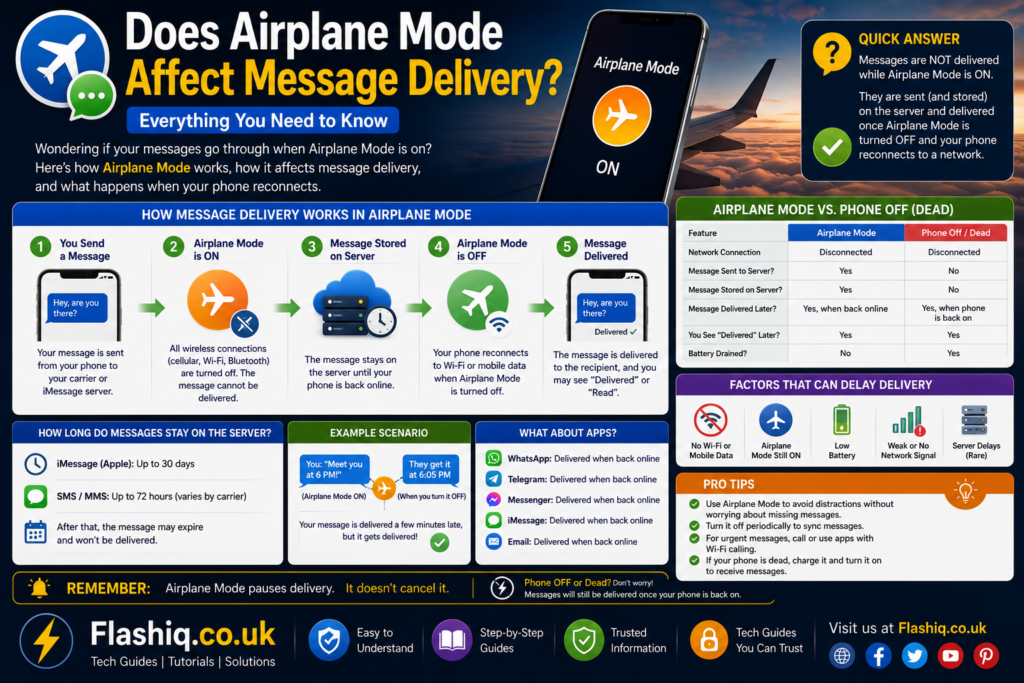
Airplane mode disconnects a smartphone from cellular networks, Wi-Fi, and Bluetooth unless those features are manually re-enabled. From the perspective of message delivery, airplane mode behaves similarly to a phone with a dead battery because the device is temporarily unreachable. SMS messages remain stored by the carrier until the phone reconnects to the cellular network. Likewise, internet-based messaging apps wait until a data connection becomes available before delivering pending conversations. The primary difference is that the phone itself remains powered on while airplane mode is active. Once airplane mode is disabled, queued messages usually arrive within moments. This behavior further reinforces the answer to do messages deliver when phone is dead—messages are generally delayed rather than discarded.
Best Practices
- Keep your phone charged if you’re expecting important messages or verification codes.
- Enable message backups when supported by your messaging apps.
- Maintain a stable cellular or Wi-Fi connection after restarting your phone.
- Keep your messaging apps updated to reduce synchronization issues.
- Confirm your mobile number and messaging settings remain active.
- Avoid repeatedly resending messages while waiting, as this may create duplicate conversations.
- Understand the difference between SMS, RCS, and internet-based messaging platforms.
- Contact your mobile carrier if important SMS messages consistently fail to arrive.
Common Mistakes
- Assuming a message has been lost simply because it was not delivered immediately.
- Confusing “Delivered” with “Read” notifications.
- Believing every messaging app follows the same delivery process.
- Ignoring poor network coverage as a possible cause of delayed delivery.
- Restarting your phone repeatedly while waiting for messages to synchronize.
- Assuming a delayed response always means the recipient’s phone battery is dead.
- Forgetting that carrier storage periods differ across providers.
- Misinterpreting temporary server delays as permanent message failures.
Pro Tips
- Use SMS for time-sensitive communication when internet access may be unreliable.
- Enable delivery reports if your messaging app or carrier supports them.
- Keep emergency contacts informed through multiple communication methods.
- Charge your phone before long trips or extended periods away from power.
- Understand the delivery indicators used by each messaging platform you regularly use.
- If an urgent message remains undelivered, consider making a phone call once the recipient is likely available.
- Regularly update your operating system to improve messaging reliability.
- Verify your network settings if messages frequently remain pending after restarting your device.
Conclusion
So, do messages deliver when phone is dead? In nearly every normal situation, the answer is yes—but not immediately. Whether you send a traditional SMS, an iMessage, or a message through WhatsApp, Telegram, Signal, or another popular platform, the message is usually stored temporarily until the recipient’s phone reconnects to the network or the internet. The exact timing depends on the messaging service, carrier policies, internet availability, and how long the phone remains offline. A dead battery rarely causes permanent message loss because modern messaging systems are designed around reliable store-and-forward technology. Understanding how these systems work helps reduce confusion when delivery confirmations are delayed. Instead of assuming your message has disappeared, it’s usually best to wait until the recipient powers their phone back on. Knowing these details allows you to communicate more confidently and better understand what happens behind the scenes whenever a phone unexpectedly runs out of battery.
Frequently Asked Questions
1. Do messages deliver when phone is dead immediately?
No. They are typically stored by the carrier or messaging service and delivered after the phone is charged and reconnects.
2. Will SMS messages be lost if someone’s phone battery dies?
Usually not. Most mobile carriers temporarily store undelivered SMS messages before delivering them later.
3. Do WhatsApp messages disappear if the recipient’s phone is dead?
No. WhatsApp stores encrypted messages on its servers until the recipient reconnects to the internet.
4. Can iMessages deliver to a dead iPhone?
Not immediately. Apple delivers pending iMessages once the iPhone is powered on and connected to the internet.
5. How long do carriers keep undelivered SMS messages?
Retention periods vary, but many carriers store messages from one day to several days before removing them.
6. Does airplane mode work the same as a dead phone?
For message delivery purposes, yes. Both prevent immediate delivery until the device reconnects.
7. Can I tell whether someone’s phone battery is dead?
No. Delayed delivery or missing read receipts may have several causes, including poor coverage or the phone being turned off.
8. Why do multiple messages arrive at once after charging a phone?
They were queued while the phone was offline and are delivered automatically after it reconnects.
9. Do all messaging apps handle offline messages the same way?
No. Each platform has its own delivery system, storage period, and synchronization process.
10. Should I resend a message if it hasn’t been delivered?
Usually not. Waiting is often the best option because the original message will typically be delivered once the recipient’s device reconnects.
Author Bio
About the Author
The author is an experienced technology writer specializing in smartphones, messaging platforms, mobile operating systems, and digital communication. With a focus on clear explanations, practical troubleshooting, and accurate research, the author creates helpful content that follows Google’s EEAT principles while making complex technical topics easy for everyday readers to understand.